
The Hanging Gardens (Gardens International)
Denis Byrne Architects in association with Cotter Naessens Architects
Not merely a building, but an assembly of buildings, a piece of the city- a mosaic of old and new.
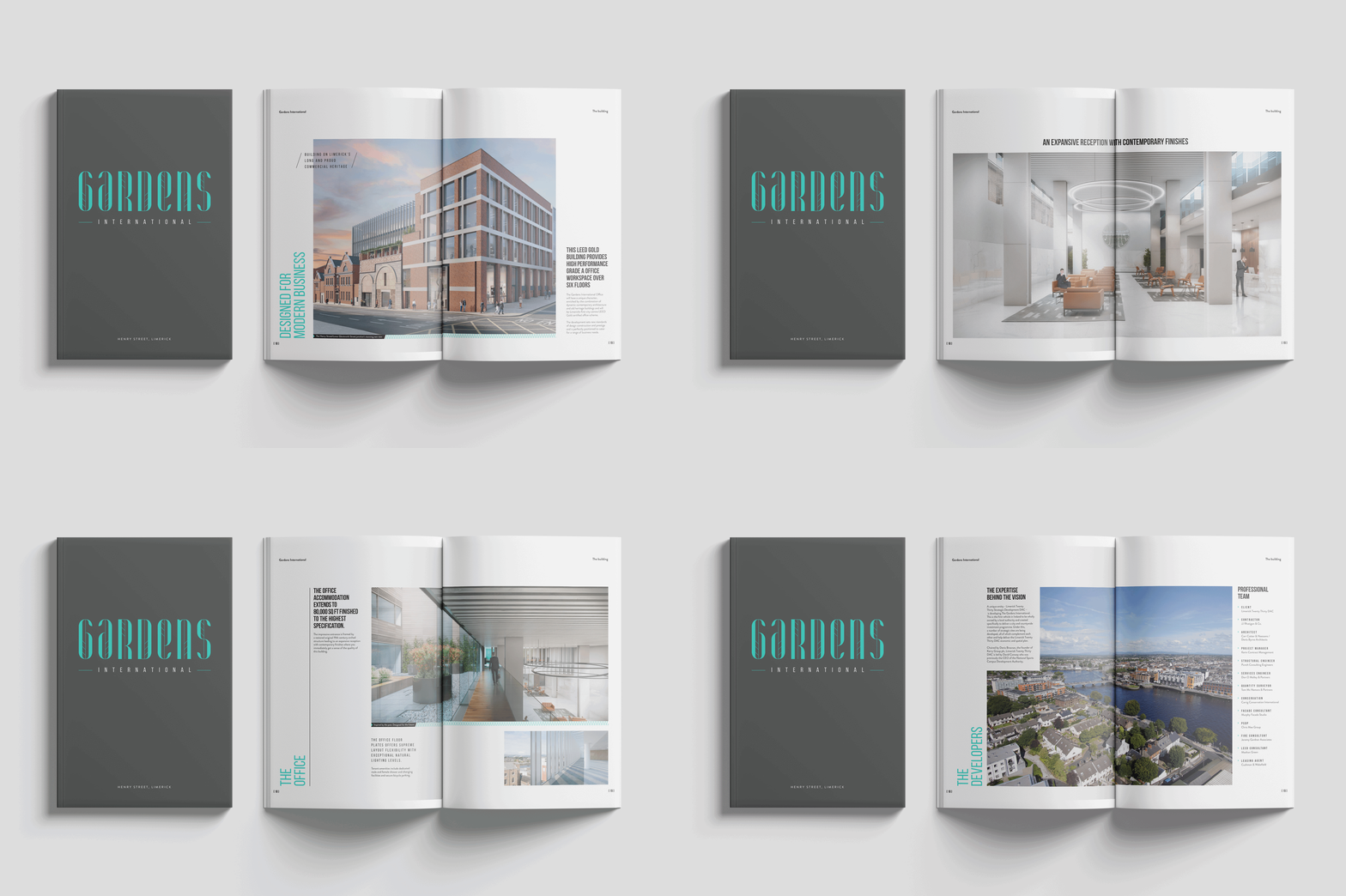
Roche’s Hanging Gardens in Limerick’s Georgian Newtown Pery were built atop stone vaults with terraced gardens and greenhouses, offering views over the River Shannon. Only two vaults remain, while the surrounding site evolved over time. Acquired by Limerick City and County Council in 2015, it is now being transformed into a workplace development combining restored historic structures, new buildings, roof gardens, and sustainable design, creating a unique blend of old and new.
The Hanging Gardens (Gardens International)
Denis Byrne Architects in association with Cotter Naessens Architects
Not merely a building, but an assembly of buildings, a piece of the city- a mosaic of old and new.
Roche’s Hanging Gardens in Limerick’s Georgian Newtown Pery were built atop stone vaults with terraced gardens and greenhouses, offering views over the River Shannon. Only two vaults remain, while the surrounding site evolved over time. Acquired by Limerick City and County Council in 2015, it is now being transformed into a workplace development combining restored historic structures, new buildings, roof gardens, and sustainable design, creating a unique blend of old and new.
The rational and elegant grid of Georgian streets in Newtown Pery, established in the 18th century, is the site of Roche’s Hanging Gardens. Built by Thomas and William Roche, who founded a bank and made no.99 Georges Street their headquarters, the gardens sat atop extensive stone vaults with terraced greenery, irrigation, and greenhouses for exotic fruits, offering panoramic views of the River Shannon.
Only two of the original vaults remain, the rest having been replaced over the 20th century by red brick buildings for the General Post Office and later a concrete frame for a commercial office, which fell into ruin during the recession. Acquired by Limerick City and County Council in 2015, the block now presents an opportunity to create a unique workplace development, blending old and new as part of Limerick 2030, where understanding each element ensures a coherent and integrated design.
The rational and elegant grid of Georgian streets in Newtown Pery, established in the 18th century, is the site of Roche’s Hanging Gardens. Built by Thomas and William Roche, who founded a bank and made no.99 Georges Street their headquarters, the gardens sat atop extensive stone vaults with terraced greenery, irrigation, and greenhouses for exotic fruits, offering panoramic views of the River Shannon.
Only two of the original vaults remain, the rest having been replaced over the 20th century by red brick buildings for the General Post Office and later a concrete frame for a commercial office, which fell into ruin during the recession. Acquired by Limerick City and County Council in 2015, the block now presents an opportunity to create a unique workplace development, blending old and new as part of Limerick 2030, where understanding each element ensures a coherent and integrated design.
The development may be described as comprising 3 key elements:
- A rational and logically planned office building, arranged about 2 green courtyards, and clad in a glass skin for panoramic riverside views. An array of deep aluminium fins modulate solar gain and provide a neutral background to the more articulated street buildings.
- The historic structures of the general post office buildings and the stone vaults of the hanging gardens: the original fabric and room volumes are restored and contemporary interventions inserted to repair the street
- The corner building, a new structure of exposed concrete with a masonry frame to the street that anchors the development and provides a prominent street presence. High thermal mass, tall spaces with no ceilings and opening louvres for natural ventilation contribute to the projects sustainable design with an A3 rating.
Uniting all of these elements, at street level, is a voluminous hall, lined in marble, a public room. The main entrance to the complex is through one of the brick vaulted spaces of the Hanging Gardens structure. The floor slabs, which were recent interventions, were removed to reveal the original volumes of the vaults. The roof terrace has been reinstated with trees and shrubs, and a pergola. In keeping with the original Hanging Gardens, the green ethos is reinforced with access to open space and views contributing to the LEED Gold certification.
The project is located on a brownfield site at the edge of the town, adjoining existing housing estates behind the main street. The design strategy introduces a new urban square that integrates the development into the town’s structure. It is planned in two phases: Phase 1 delivers 22 social housing units arranged around the central space, while Phase 2 will add 13 more to complete the square.
The development may be described as comprising 3 key elements:
- A rational and logically planned office building, arranged about 2 green courtyards, and clad in a glass skin for panoramic riverside views. An array of deep aluminium fins modulate solar gain and provide a neutral background to the more articulated street buildings.
- The historic structures of the general post office buildings and the stone vaults of the hanging gardens: the original fabric and room volumes are restored and contemporary interventions inserted to repair the street
- The corner building, a new structure of exposed concrete with a masonry frame to the street that anchors the development and provides a prominent street presence. High thermal mass, tall spaces with no ceilings and opening louvres for natural ventilation contribute to the projects sustainable design with an A3 rating.
Uniting all of these elements, at street level, is a voluminous hall, lined in marble, a public room. The main entrance to the complex is through one of the brick vaulted spaces of the Hanging Gardens structure. The floor slabs, which were recent interventions, were removed to reveal the original volumes of the vaults. The roof terrace has been reinstated with trees and shrubs, and a pergola. In keeping with the original Hanging Gardens, the green ethos is reinforced with access to open space and views contributing to the LEED Gold certification.
Awards & Publications
Access a PDF from Architecture Ireland about The Hanging Gardens project below.